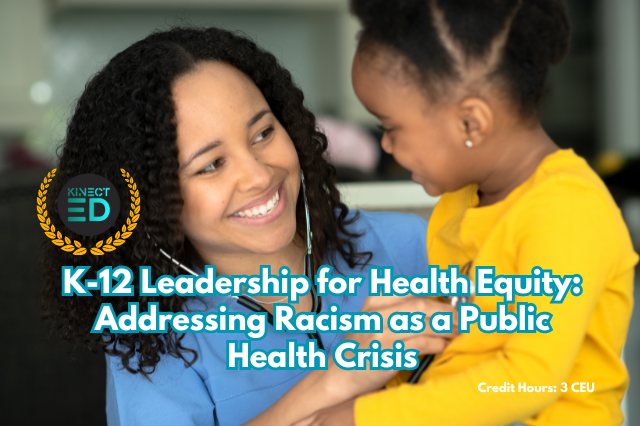
Empowering Educational Leaders to Address Racism as a Public Health Crisis
In today’s complex and diverse educational landscape, addressing systemic racism is not just a moral imperative but also a critical public health issue. To empower educational leaders, we are proud to offer our featured course, K-12 Leadership for Health Equity: Addressing Racism as a Public Health Crisis, along with a compelling podcast episode featuring Dr. Danielle Scott, which together provide a comprehensive approach to tackling these pressing challenges.
Understanding the Intersection of Racism, Public Health, and Education
In our featured podcast episode, Racism is a Public Health Crisis, Dr. Danielle Scott, a renowned professor and speech-language pathologist, dives into the profound impact of racism on public health and speech-language development. This episode sheds light on the barriers faced by marginalized students and communities, highlighting the critical need for culturally responsive approaches in education.
Dr. Scott’s insights into the therapeutic relationships between speech-language pathologists and culturally and linguistically diverse students offer invaluable perspectives for educators. She emphasizes that addressing racism within the field of speech-language pathology is essential for fostering inclusive and equitable educational environments. By understanding how systemic racism affects speech and language development, educators can implement more effective, evidence-based interventions that promote student success.
Course Overview: K-12 Leadership for Health Equity
Our course, K-12 Leadership for Health Equity: Addressing Racism as a Public Health Crisis, is designed specifically for K -12 administrators, including superintendents, principals, directors of special education, and directors of community education. This online symposium offers a dynamic blend of webinars, interactive sessions, and collaborative workshops, providing a comprehensive learning experience.
Course Objectives:
- Equip administrators with the leadership competencies required to address racism and its impact on public health within schools.
- Foster an understanding of how systemic racism affects student health, well-being, and academic success.
- Develop actionable strategies for creating inclusive and equitable educational environments.
Connecting the Dots: Podcast Insights and Course Applications
The insights shared by Dr. Danielle Scott in the podcast episode provide a foundational understanding that complements our course content. By listening to the podcast, educators and administrators can gain a deeper appreciation of the intersectionality between racism and public health, which is further explored and addressed through our comprehensive course modules.
Both the podcast and the course aim to empower educational leaders to:
- Recognize and Address Systemic Racism: Understand the profound impact of racism on student health and academic success, and develop strategies to dismantle systemic barriers.
- Implement Culturally Responsive Practices: Learn how to integrate culturally responsive teaching methods and curricula that reflect the diverse experiences of students.
- Foster Inclusive Environments: Create school cultures that promote equity, inclusivity, and the well-being of all students.
Enroll Today and Make a Difference
We invite you to take advantage of these invaluable resources to enhance your professional development and contribute to a more equitable educational landscape.
Register for Our Course:
- K-12 Leadership for Health Equity: Addressing Racism as a Public Health Crisis
- Credit Hours: 3 CEU
- Format: Online symposium including webinars, interactive sessions, and collaborative workshops.
- Target Audience: K-12 administrators including superintendents, principals, directors of special education, and directors of community education.
Listen to the Podcast:
- Title: Racism is a Public Health Crisis
- Guest: Dr. Danielle Scott
- Focus: The impact of racism on speech and language development, barriers faced by marginalized students, and fostering culturally responsive approaches.
Together, these resources will equip you with the knowledge and tools needed to address racism as a public health crisis within the educational setting, ensuring all students have the opportunity to thrive.